
Digital CMC CERSI - closing the gap between digital innovation and regulatory readiness
Background
Fewer than 15% of digital and AI-enabled tools progress into regulatory submissions. That gap between what’s technically possible and what’s regulatory-ready has held back digital transformation across pharmaceutical manufacturing.
Although predictive modelling, artificial intelligence and machine learning have significant potential to transform pharmaceutical development and manufacturing, adoption within regulated chemistry, manufacturing and controls (CMC) environments has remained limited.
Organisations developing digital tools have faced ongoing uncertainty around evidence generation, model credibility, risk and lifecycle management, with no shared terminology or assessment approach to guide them from development to regulatory use.
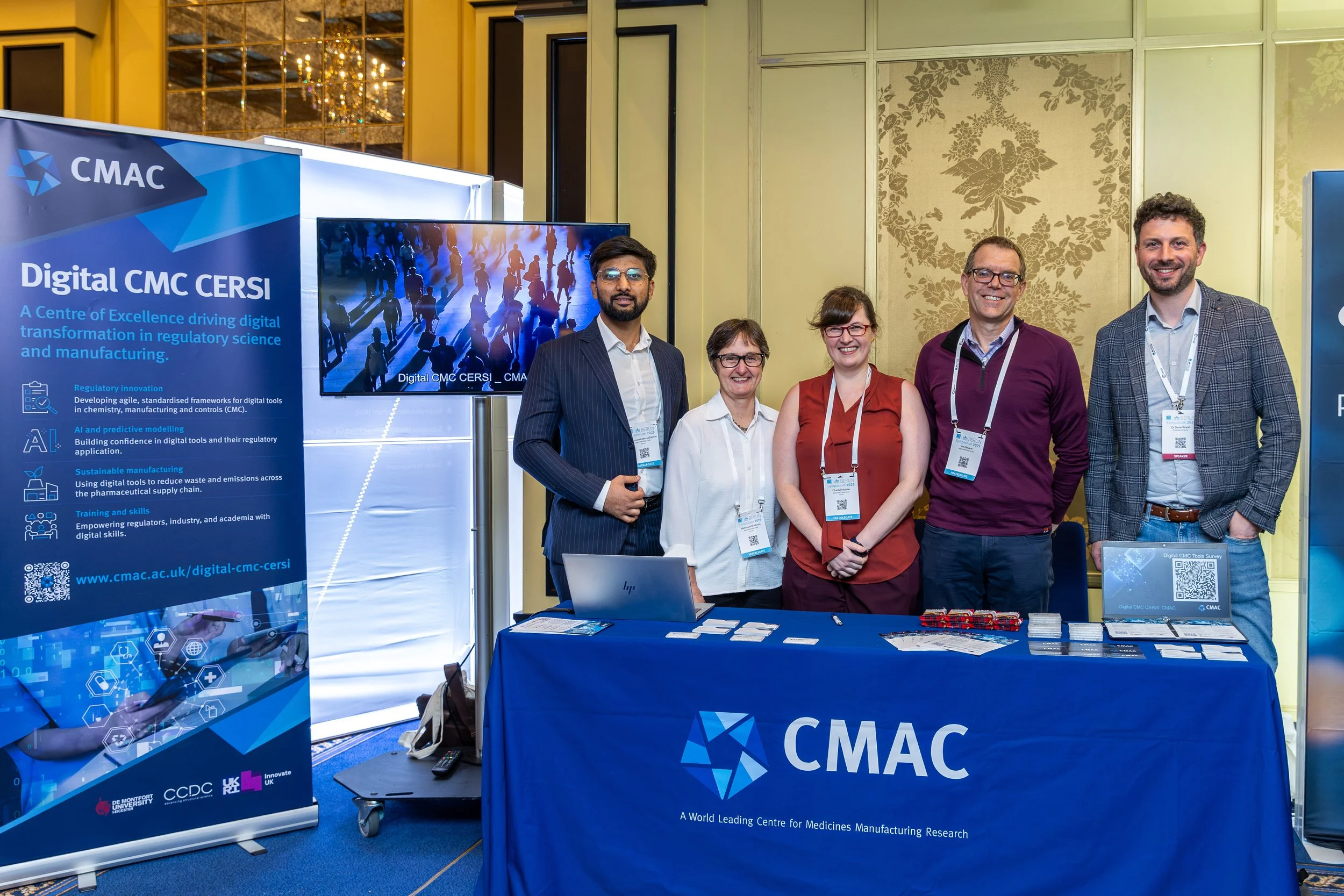
The Digital CMC Centre for Excellence in Regulatory Science and Innovation (CERSI) project set out to close this gap.
The challenge
The project brought together industry, academia and regulators, including the Medicines and Healthcare products Regulatory Agency (MHRA), in a neutral, pre-competitive space to tackle this shared problem head-on.
Rather than build individual technologies, the Digital CMC CERSI focused on something more foundational: the regulatory science needed to support any digital or AI-enabled tool moving through the CMC lifecycle, consistently and transparently. That meant identifying barriers, sharing knowledge, and co-creating approaches across sectors that don't typically collaborate this closely.
Key outputs
The programme delivered a suite of outputs to help organisations develop, assess and implement digital technologies within pharmaceutical environments.
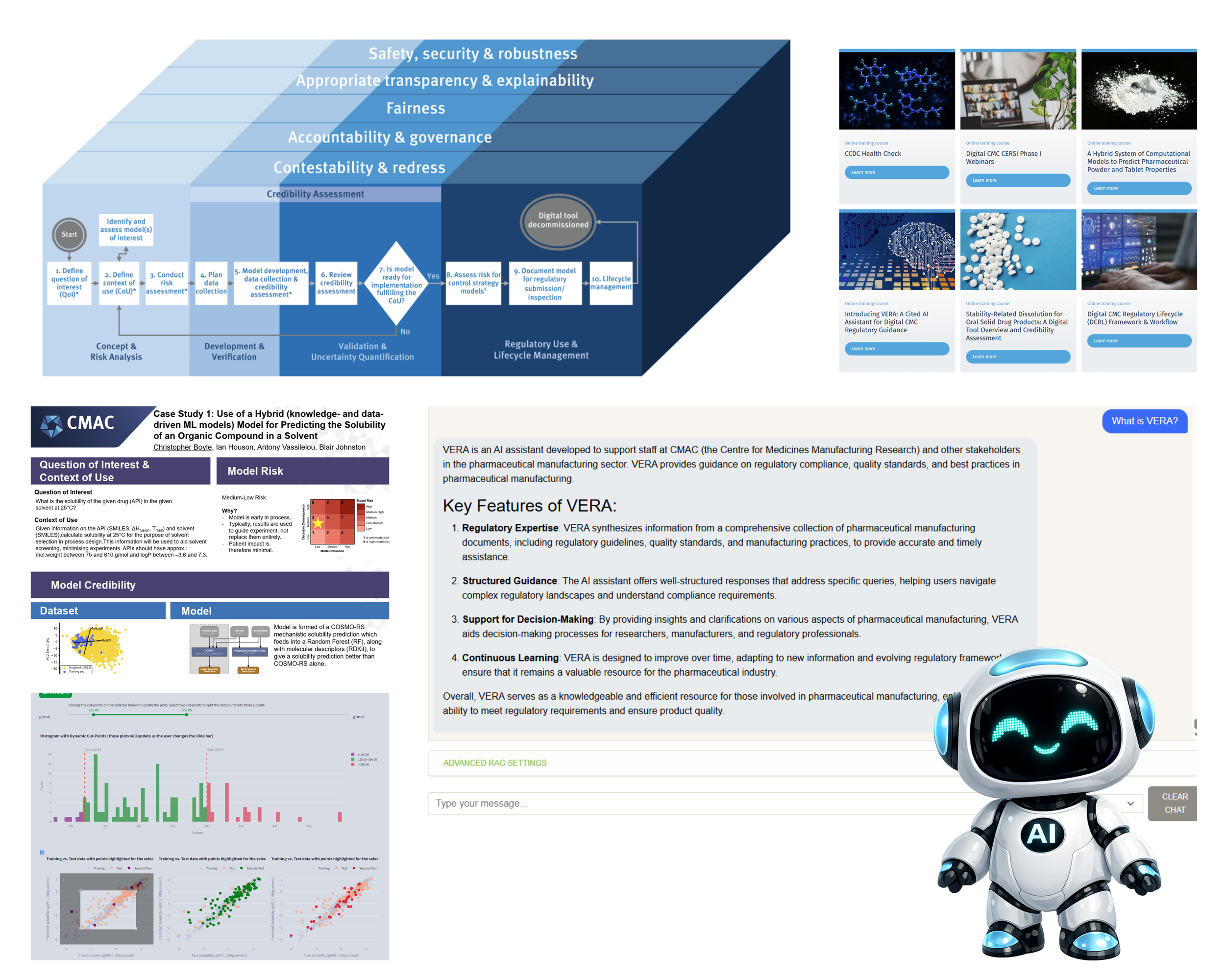
The DCRL Framework – a common language for innovators, manufacturers and regulators to assess digital tools across the pharmaceutical CMC lifecycle.
The DCRL Workflow – a practical, end-to-end pathway from defining the question of interest through to model selection, evidence development, credibility assessment and ongoing lifecycle management.
Used together, they turn regulatory principles into actionable steps, helping organisations demonstrate their tools are reliable, transparent and proportionate to risk.
These key tools are also backed by a wider toolkit: VERA, an AI-enabled regulatory support tool; the Digital CMC Sandbox – a structured environment for testing and evaluating digital tools; and CMAC’s SkillsFactory – a learning platform building capabilities across the sector – plus publications, surveys, webinars and case studies that put the frameworks into practice.
The Impact
Through the development of practical frameworks, workflows and supporting resources, the programme has:
Established a common language and shared framework for assessing digital and AI-enabled technologies across the pharmaceutical CMC lifecycle.
Translated regulatory principles into practical guidance through the DCRL Framework and Workflow.
Improved access to regulatory science through freely available tools, publications, webinars and case studies.
Strengthened collaboration between industry, academia and regulators, creating a shared understanding of how digital innovation can move confidently towards regulatory adoption.
Daniel Markl, Digital CMC CERSI Lead and Associate Director at CMAC said: “I have been delighted to see how much we have achieved in such a short time. By creating a common language and approach for all model types through the DCRL Framework and its supporting enablers, the Digital CMC CERSI outputs will help industry and regulators unlock the full potential of computational models: from faster development to more robust, efficient and sustainable medicines manufacturing.”
James Pound, Executive Director, Innovation and Compliance at the MHRA said: "The Digital CMC CERSI has demonstrated the value of bringing regulators, academia and industry together to tackle emerging regulatory science challenges. Its work has helped build capability and develop practical approaches to support the use of innovative digital technologies in medicines development and manufacturing. This collaborative model is an important part of ensuring that regulatory science keeps pace with scientific and technological advances so we can reap the benefits of digital innovation whilst maintaining appropriate regulatory oversight."
Next steps
While the funded phase of Digital CMC CERSI has now ended, the programme's frameworks, tools, publications and collaborative approaches will continue supporting organisations adopting digital and AI-enabled technologies across pharmaceutical CMC.
As digital technologies continue to evolve, ongoing collaboration between industry, academia and regulators will remain essential to ensure innovation can move confidently into regulated practice. The foundations established through Digital CMC CERSI provide a strong platform for future regulatory science and innovation across the sector.
Find out more: cmac.ac.uk/digital-cmc-cersi