
Virtual Expert for Regulatory Assistance (VERA)
Overview

VERA is an AI-enabled support tool developed by the Digital CMC CERSI to accelerate the safe and consistent adoption of digital and AI technologies in pharmaceutical CMC.
VERA supports the Digital CMC CERSI mission to advance regulatory science by providing a practical bridge between complex global guidance and real-world implementation. Aligned to the Digital CMC Regulatory Lifecycle (DCRL) framework, it helps users navigate regulatory expectations, identify relevant evidence requirements and support regulator-ready decision-making.
VERA provides a text-based, conversational interface where users can ask natural language questions relating to regulatory expectations, best practices and technical requirements associated with digital CMC tools.
What VERA supports
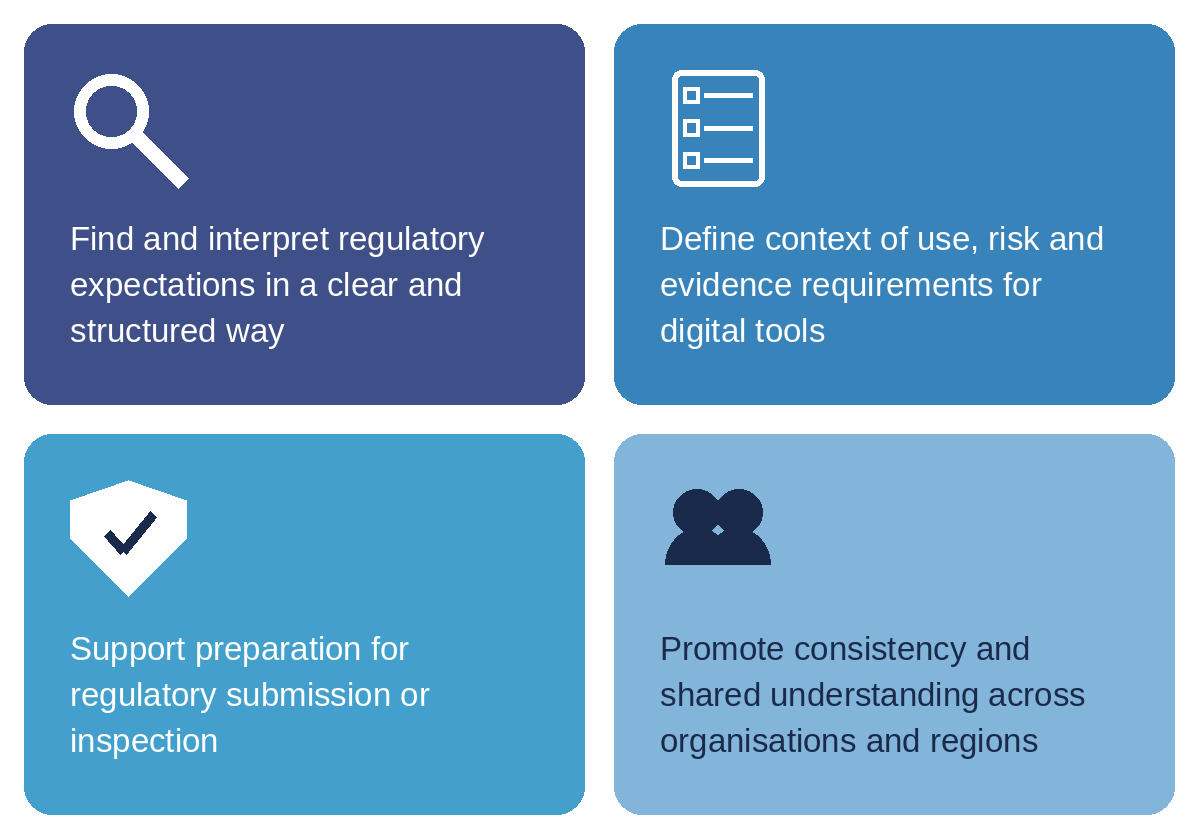
VERA acts as an intelligent assistant aligned to the DCRL framework, helping users to:
How VERA works
VERA uses an OpenAI large language model (LLM) connected to a curated Retrieval-Augmented Generation (RAG) database containing materials relevant to the Digital CMC CERSI scope.
The knowledge base currently includes more than 300 regulatory guidance documents, standards and scientific best-practice resources, including draft, discussion and published materials, alongside open-access elements of paywalled publications where appropriate.
To improve reliability and reduce hallucination risk, the LLM is constrained to generate responses only from content contained within the RAG database. If information relevant to a query is not available within the knowledge base, VERA will indicate this directly.
All responses include supporting references and relevant source information to improve traceability and transparency.
Intelligent filtering and continuous updates
A key feature of VERA is its intelligent filtering system, which enables users to refine searches by:
Region
Organisation
Document type
Year range
This metadata-driven approach helps users identify the most relevant regulatory context for their specific application or use case.
The platform is designed to be continuously updated as new guidance documents, standards and best-practice resources emerge, ensuring that the knowledge base evolves alongside the regulatory landscape.
The VERA knowledge base (RAG Database)
At the core of VERA is a curated Retrieval-Augmented Generation (RAG) database, which ensures that responses are grounded in authoritative and up-to-date sources. This database brings together:
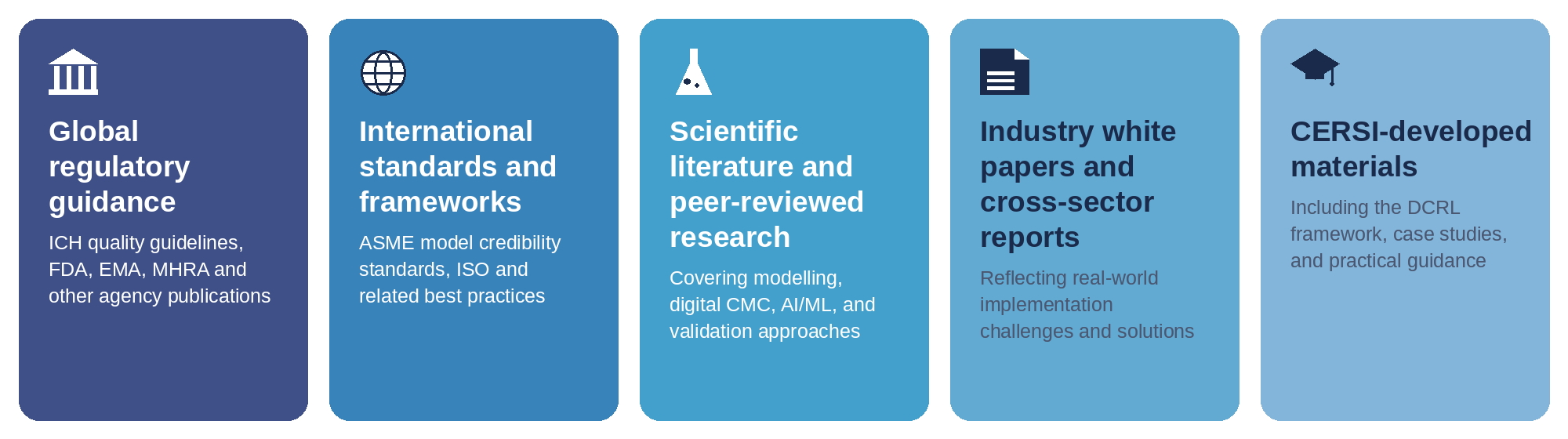
This structured evidence base ensures that VERA’s outputs are traceable, transparent and aligned with current regulatory thinking, supporting confidence for both technical experts and non-specialist users. The LLM is restricted to only providing responses from the RAG database and provides the reference(s) and relevant page number(s) when responding to all queries.
Why VERA matters
VERA exemplifies the Digital CMC CERSI approach: combining science, regulation and innovation to support the responsible adoption of emerging technologies in pharmaceutical CMC.
By making complex regulatory knowledge more accessible, queryable and actionable, VERA helps to:
Accelerate medicines development
Improve global regulatory alignment
Strengthen trust in digital and AI-enabled approaches
Safeguard product quality and patient safety
Join our mailing list

Stay up to date with news and events from Digital CMC CERSI and the wider CMAC network — including webinars, workshops, and community updates.
Funding and support
Funded and supported by the MHRA and the Office for Life Sciences (OLS) managed by Innovate UK with delivery partner Medical Research Council (MRC) the as part of the “RS&IN Implementation Phase: Human Health CERSI” Innovate UK: Project no. 10139447