

Digital CMC Regulatory Lifecycle workflow
Overview
The Digital CMC Regulatory Lifecycle (DCRL) workflow is the practical implementation pathway within the DCRL framework. It provides a structured, end-to-end process that guides users through the development, assessment, deployment and lifecycle management of digital predictive tools.
The workflow consists of ten connected stages, beginning with defining the question of interest and context of use, and progressing through model selection, risk assessment, data strategy, model development, credibility assessment, documentation and ongoing lifecycle management. This stepwise approach translates regulatory principles into actionable activities, helping organisations develop digital tools in a way that is consistent, transparent and aligned with regulatory expectations.
What it supports
Both the DCRL framework and the DCRL workflow guide across:

The DCRL workflow is an integral part of the DCRL framework. To learn more about both the workflow and the framework, explore the interactive DCRL framework tool.
In this tool, users can find explore each workflow stage in more detail and find key references that can support regulatory-aligned model development, implementation and onward management.
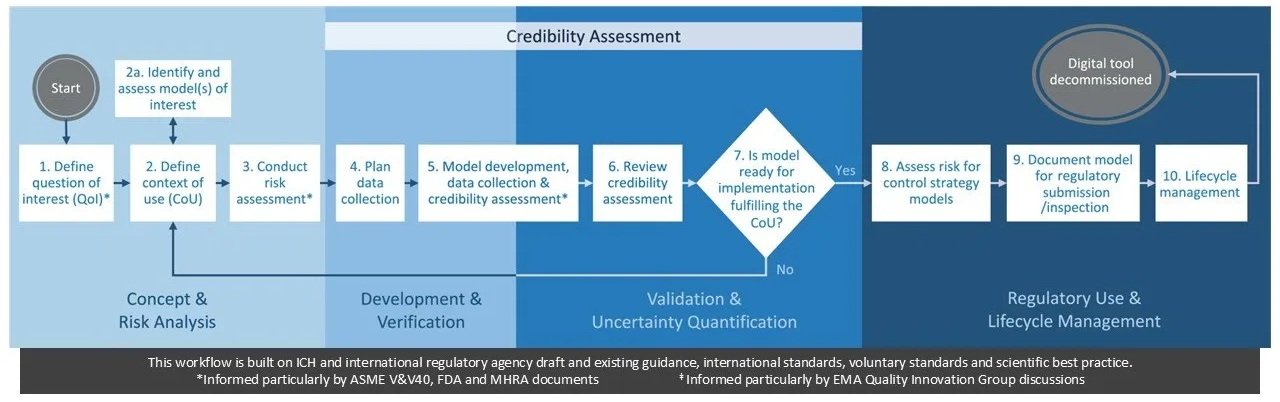
The 10 stages of the DCRL workflow
The workflow is structured around 10 connected stages that guide the development, assessment and regulatory readiness of digital predictive tools in CMC.
-
Clearly identify the scientific or operational question the digital tool is intended to address.
-
Specify how and where the tool will be used (e.g. development, manufacturing, regulatory submission) and its impact on decision-making.
-
Determine the most appropriate modelling approach (e.g. mechanistic, data-driven, hybrid) based on the question and available data.
-
Assess the potential impact of model errors on product quality, patient safety and regulatory decisions.
-
Define the data strategy, including sources, quality requirements, and experimental or operational data generation.
-
Develop the model and begin assessing its scientific validity and performance against the intended use.
-
Evaluate whether the model is sufficiently reliable and robust for its defined context of use.
-
Understand how model uncertainty could propagate into manufacturing control or regulatory decisions.
-
Prepare clear, transparent documentation to support regulatory submission, inspection, or internal governance.
-
Maintain and monitor the model over time, including updates, revalidation, and ongoing performance oversight.
Evidence base and sources
The DCRL workflow is grounded in a broad and evolving evidence base. It integrates:
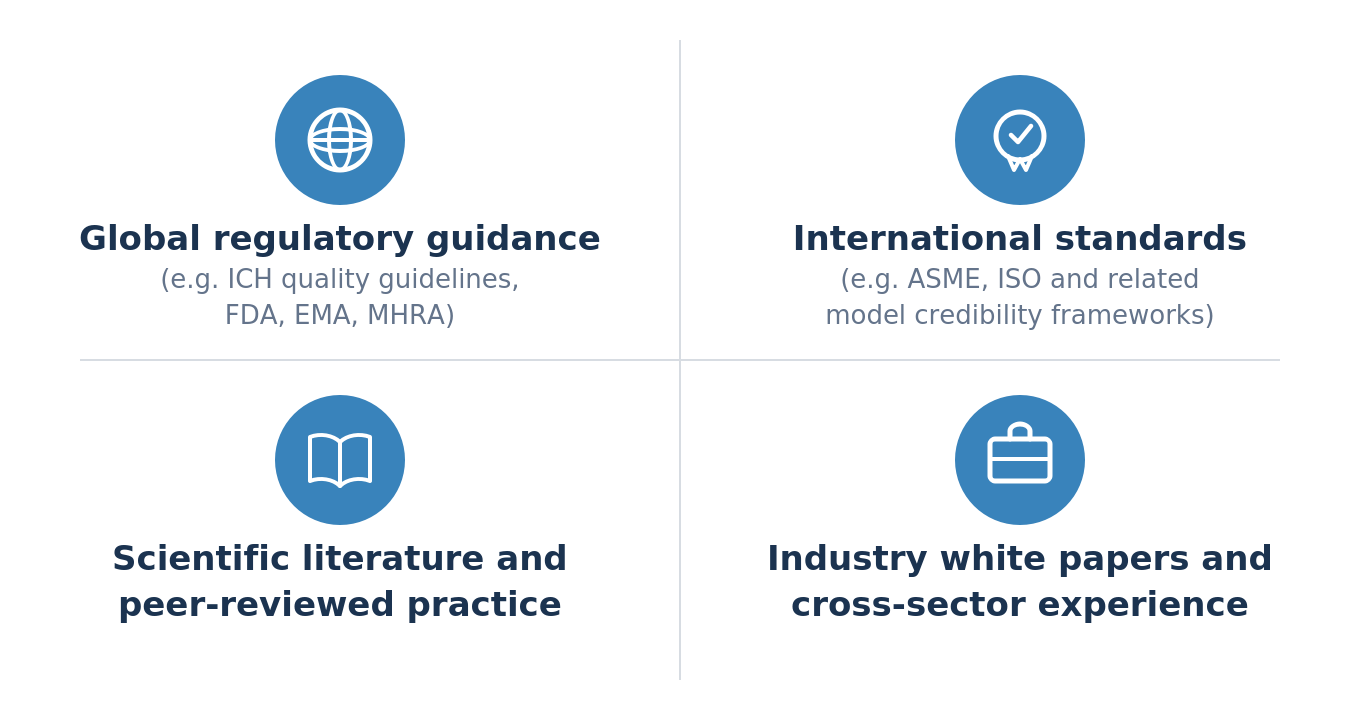
By consolidating these sources into a single, coherent workflow, the DCRL provides a harmonised and practical approach that reduces ambiguity, aligns expectations across regions, and supports consistent regulatory decision-making.
Supporting innovation in digital CMC

For the Digital CMC CERSI, the DCRL workflow is an important mechanism for bridging innovation and regulation, enabling digital and AI-enabled tools to be adopted in a way that is consistent, risk-informed and globally aligned.
The workflow helps ensure that advances in digital CMC translate into real-world benefits, including faster development, more resilient supply chains and continued assurance of safe, high-quality medicines.
Join our mailing list

Stay up to date with news and events from Digital CMC CERSI and the wider CMAC network — including webinars, workshops, and community updates.
Funding and support
Funded and supported by the MHRA and the Office for Life Sciences (OLS) managed by Innovate UK with delivery partner Medical Research Council (MRC) the as part of the “RS&IN Implementation Phase: Human Health CERSI” Innovate UK: Project no. 10139447