

EPSRC Centre for Doctoral Training
CEDAR CDT
Fully funded PhD programme. University of Strathclyde, University of Leeds, University of Sheffield and Imperial College London.
About the programme
Medicines are reaching patients slowly. They cost too much and harm the environment too. CEDAR exists to change that, and you could be part of it.
Built with leading pharmaceutical companies, CEDAR is an EPSRC Centre for Doctoral Training in cyber-physical systems for medicines manufacturing. You'll work on research that matters. It will be co-designed with industry, focusing on real manufacturing challenges. The goal is to make new medicines faster, cheaper, and more sustainable to produce.
You'll join a cohort-based community across four leading universities. We dedicate year one to structured training. Then, you'll start your three-year research project and drive the work.
Why CEDAR?
What sets this programme apart
Top research institutions
Located at the University of Strathclyde, with options available at Leeds, Sheffield, and Imperial College London.
World-class training and technologies
Access to state-of-the-art processing and digital technologies, including AI, robotics, and augmented reality.
Industry placements
Gain experience through placements with top pharmaceutical firms like AstraZeneca, Pfizer, and Sanofi.
Global networking
Present your research at international events and build connections across academia and industry.
Research challenges
Find the right challenge for you
Each student works on their own project but also teams up with others on a shared research challenge. Academic supervisors and industry partners co-design projects.
When you apply, choose your preferred research challenge from the list below.

-
Description text goes here
-
Description text goes here
-
Description text goes here
Programme structure
Your CEDAR journey
CEDAR is a four-year programme. Your first year builds confidence and capability before your independent research project begins.
Every researcher's path is different — this is a typical outline of what to expect.
Year 1
Structured training in the CEDAR cohort helps you build core skills. You’ll learn about cyber-physical systems, AI, robotics, and augmented reality. Then, you can choose your Research Challenge Theme.
Year 2
Your independent research project begins, co-designed with your academic supervisor and an industry partner.
Year 3
Keep researching. You can also do an industry placement and present your work at academic and industry events.
Year 4
Finish your research project and thesis so you can start your career in academia or industry.
Funding and Eligibility
Studentship details
£20,780+ per year
Tax-free annual spend. Home tuition fees covered. Research and training costs included. Four years total funding.
Entry requirements
Minimum 2:1 Honours degree (or international equivalent)
Relevant fields are chemistry, physics, chemical engineering, materials science, pharmaceutical sciences, computer science, data science, and electrical or mechanical engineering.
MSc desirable
IELTS 6.5 (minimum 5.5 in each element) for international students whose first language is not English
Eligibility
UK and Irish nationals
EU Settlement Scheme (settled or pre-settled status)
Indefinite leave to remain in the UK
Up to three positions are available for international applicants. Competition is high; we prefer applicants with an MSc and an IELTS score of 6.5.
Part-time opportunities may be available; please contact the Skills team for more information.
CEDAR is dedicated to promoting equality, diversity, and inclusion in its research, teaching, and workspaces. Our four partner universities share this commitment. Each university has Athena Swan awards at both the institutional and departmental levels. These awards recognise their efforts to promote gender equality. They are also all members of the Race Equality Charter. The University of Strathclyde, the University of Sheffield, and Imperial College London are accredited under the UK Government's Disability Confident scheme.
How to apply
Application process
1) Browse 2026 project outlines
Review available projects and check availability. You may select multiple projects across Research Challenge teams.
2) Complete the online application form
Click any of our Apply now buttons to submit your application. A downloadable template is available to prepare your answers offline. No CVs will be accepted - you must enter all information in the form. If you need this form in a another format or need help filling it out, please email skills@cmac.ac.uk.
3) Shortlisting and interview
We review applications on a rolling basis. You will hear back within one month of the closing date. Conditional offers may be given. An unconditional offer will follow via the university admissions system.
Apply early to access the widest selection of projects. Questions? Contact skills@cmac.ac.uk

Read about how we process your data by reading our Privacy Notice.
Researcher voices
What our PhD researchers say

“For students eager to push the boundaries of pharmaceutical manufacturing and develop in-demand skills in data-driven research, a PhD at CMAC is a stellar choice.”
Theo Tait, PhD Researcher
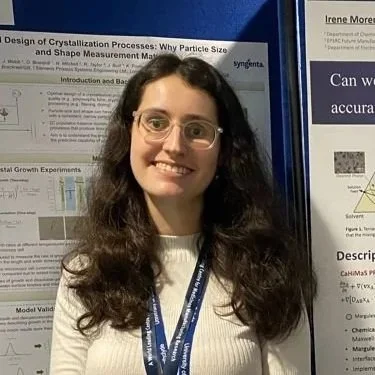
“CMAC helps you develop your skills and expertise in line with industry needs, offering a pathway to success through collaboration with leading partners.”
Irene Moreno Flores, PhD Researcher
FAQs
-
Part-time study might be an option for applicants who can't join the programme full-time. If you want to see how part-time arrangements could work for a specific project, please get in touch.
-
At the moment, we are unable to accept international applicants. We hope to open applications to international students in the next round, from 5th December 2025 to 30th January 2026. Please check back or follow us on LinkedIn for updates.
-
Yes, when you fill in the application form, you can choose multiple projects from different Research Challenge Teams.
-
Yes, feel free to reach out to supervisors. They can provide more details about research projects and what it's like to do a PhD. If you have questions about the application process, please contact the Skills team.
-
In your first year, experts from partner institutes will train you. This will take place during residential training weeks at the Universities of Leeds, Sheffield, Strathclyde, and Imperial College London. You will then apply this training in the CPS Living Lab Team projects. Here, you’ll collaborate with peers to design and implement your own cyber-physical system for medicines manufacturing research. You’ll develop systems-thinking skills and understand the changing medicines landscape, digital transformation, and sustainability. You’ll also build a solid foundation in transferable skills. The organisation fully covers all training, travel, and placement costs.
If this programme isn't for you, check the CMAC website for other PhD options.
Funders and partners
