Levelling up in the lab: CMAC’s new VR game sparks STEM curiosity
Overview of the challenge
At the forefront of innovation in medicines manufacturing, CMAC’s Digital Manufacturing Research Centre (DM²) is not only transforming how medicines are made, but also how future scientists are inspired. As part of a new outreach initiative, CMAC, in collaboration with The Glasgow School of Art, has developed a virtual reality (VR) game designed for the Meta Quest headset, offering primary and secondary school pupils an immersive, hands-on introduction to the world of advanced pharmaceutical production.
STEM engagement among young learners remains a national priority, especially in fields like digital manufacturing and pharmaceutical sciences, where future talent pipelines are critical. CMAC aimed to bridge the gap between complex scientific concepts and early-stage education by creating an experience that is both educational and fun.
The Solution - A VR Journey into Digital Medicines Manufacturing
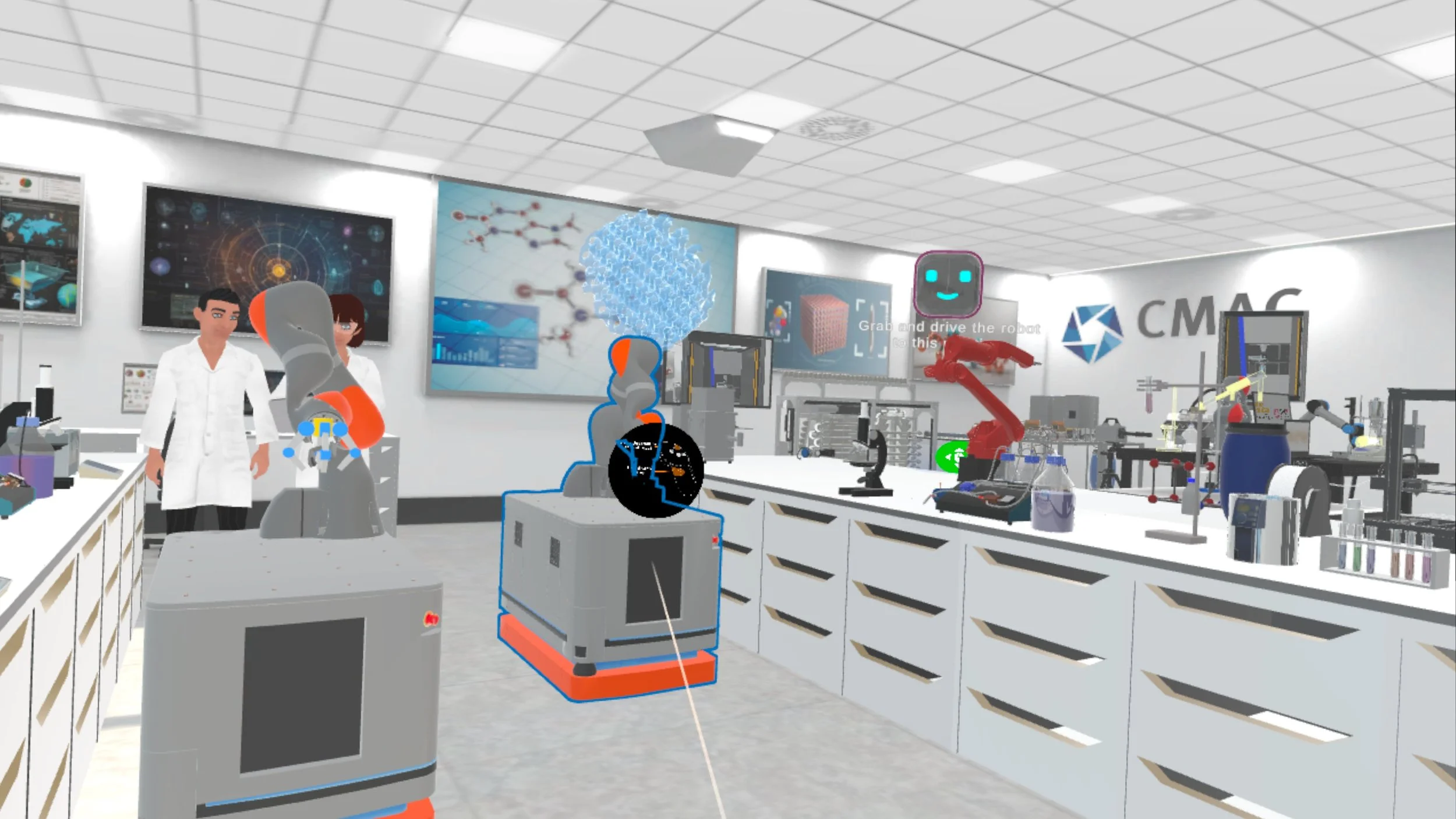
The result is a gamified VR experience where students step into the shoes of a young scientist working in a futuristic lab. Guided by a friendly robot named MediMia, players navigate a series of interactive missions that simulate real-world processes used in the production of medicines.
From programming crystallisation machines to driving robotic helpers and troubleshooting equipment, each task is designed to mirror authentic manufacturing challenges, translated into age-appropriate, engaging gameplay. Concepts like data security, automation, and process control are introduced through relatable analogies, such as baking a cake or assembling a puzzle.
Impact
Immersive learning: The Meta Quest platform enables students to explore scientific environments in 3D, fostering understanding through tactile interaction.
STEM skills development: Players practice critical thinking and problem-solving, core competencies for future careers in science and technology.
Career inspiration: By progressing from “intern” to “lab assistant,” students experience a sense of achievement and are encouraged to envision themselves in STEM roles.
Accessibility and inclusion: The game’s design ensures that complex ideas are made accessible to learners of all backgrounds, helping to widen participation in digital tech and science.
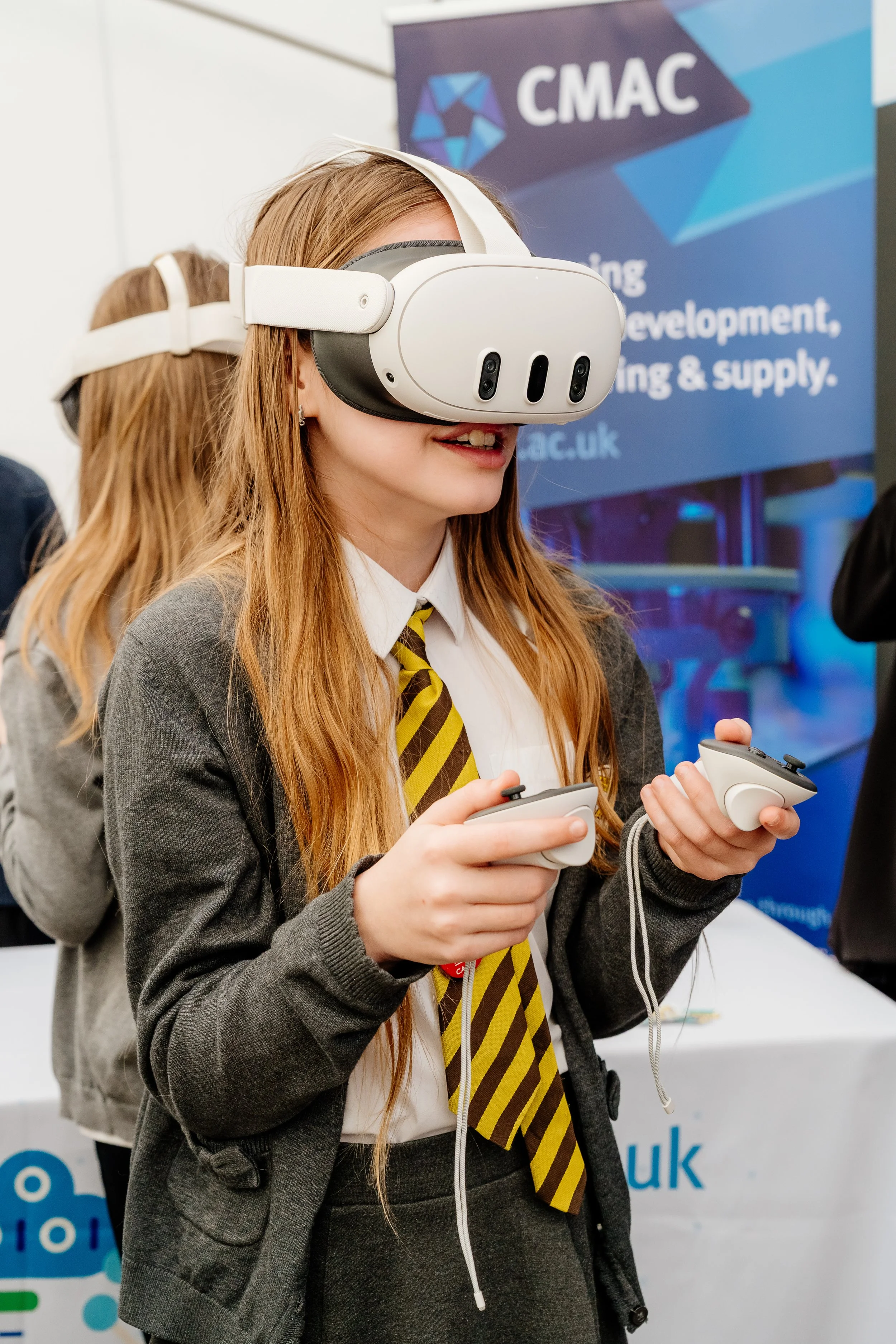
School pupil trying out virtual reality game
Bringing the science to life
In November, CMAC showcased the VR game to over 100 pupils from secondary schools across Edinburgh, East Lothian and Midlothian during an event led by Skills Development Scotland and the Life and Chemical Sciences Skills Group. The event was part of Scottish Careers Week, spotlighting job roles and the stories of people shaping their futures through Scotland’s Life and Chemical Sciences sector. There, pupils had the chance to experience how our scientists use VR in the lab, gain an insight into how artificial intelligence is helping us to shape and understand the future of medicines manufacturing, as well as testing out our interactive game.
“Emerging technologies like VR allow us to open the doors of the laboratory to every young learner.
By transforming complex scientific ideas into playful, immersive experiences, we help pupils imagine themselves as the scientists and engineers of the future.”
Prof Paul Chapman, Director of Emerging Technology, The Glasgow School of Art.
Conclusion
The use of VR across CMAC’s research demonstrates how emerging technologies can demystify science, engage young minds, and build future talent pipelines. By blending play with purpose, CMAC is not only advancing medicines manufacturing but also shaping the learning experiences for scientists and engineers of tomorrow.
Looking ahead, CMAC representatives are set to enhance their expertise in public engagement training and preparing for a series of events in early 2026. These activities will help CMAC showcase its work to a broader audience and inspire even more young minds to explore careers in science and technology.
The STEM engagement undertaken as part of this case study was conducted with funding from the Engineering and Physical Sciences Research Council (EPSRC), for Made Smarter Innovation - Digital Medicines Manufacturing Research Centre (DM²) at CMAC.