
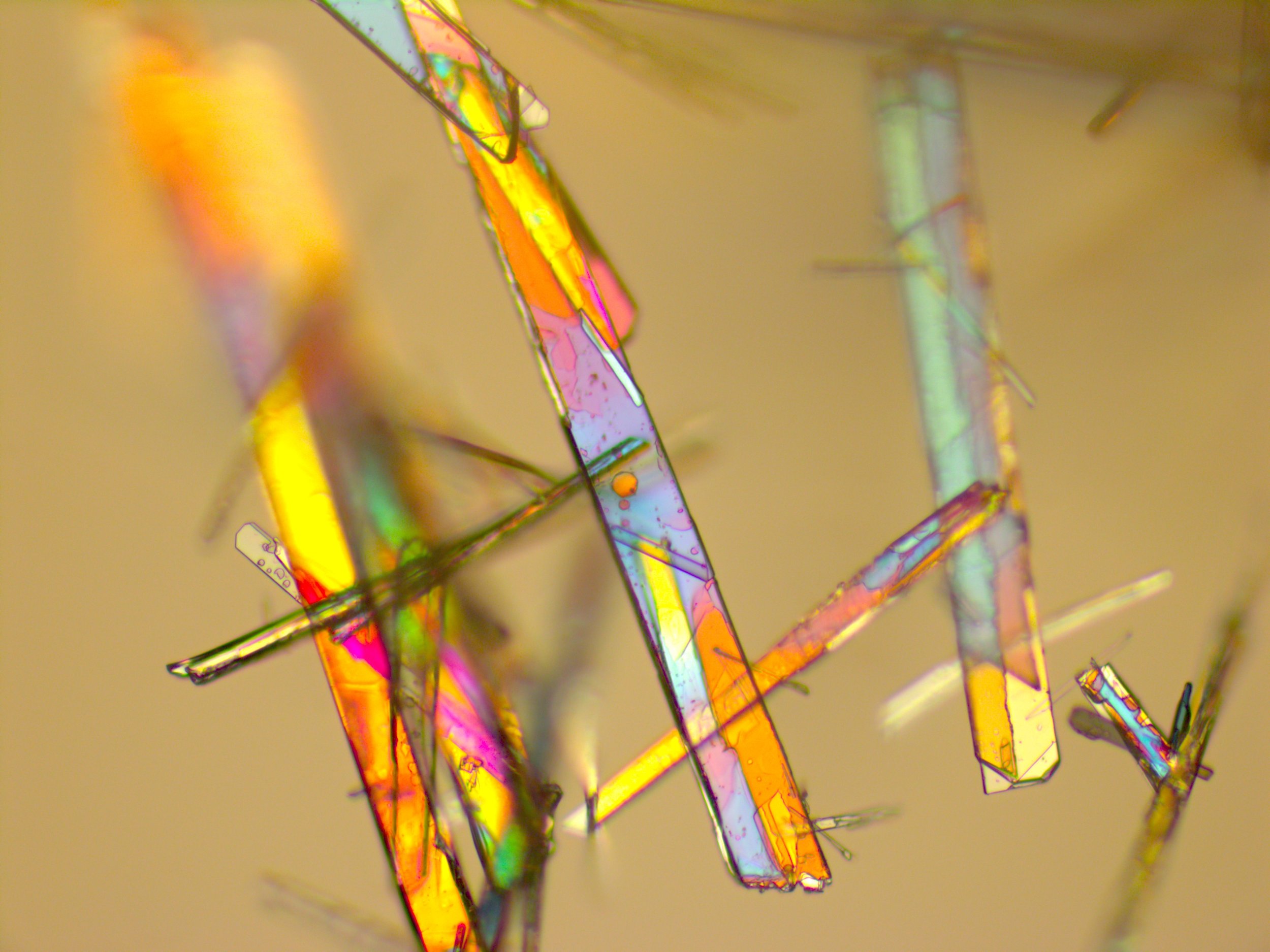
CMAC National Facility - Crystallisation
End-to-end crystallisation development. Scalable from milligrams to pilot.
We deliver end-to-end crystallisation development using a digital-first, model-informed approach — accelerating development and minimising material use from the outset.
By combining AI-driven screening, first-principles modelling and targeted experimentation, we rapidly establish robust links between process parameters and critical quality attributes, giving you reliable control of particle size, polymorph, and yield.
Our integrated platforms span batch and continuous crystallisation, with embedded PAT and advanced process control for real-time monitoring. Supported by digital twins, we provide confident scale-up from grams to pilot scale — alongside particle engineering, filtration, and drying capabilities to ensure your material is ready for downstream processing.
What sets us apart

It takes less than 50g to get started
Our entire development pipeline — from screening to scale-up — is designed to operate with minimal API. You can build a deep, scalable process understanding before significant material investment is needed.
This allows you to:
Accelerate early-stage decisions — Begin process development and form screening during the discovery phase, when API supply is still limited, avoiding costly delays while you wait for material to become available.
Reduce financial risk — Explore a wider range of crystallisation conditions, solvents, and process routes without the expense of producing large quantities of API, keeping development costs low before a candidate is confirmed.
Run development in parallel with synthesis — Because so little material is needed, crystallisation process development can proceed alongside ongoing synthesis campaigns rather than waiting for batches to accumulate, compressing your overall development timeline.
-
Digital-first process design
We use AI-driven screening, first-principles modelling and digital twins to guide experimentation — meaning fewer experiments, less material used, and faster decisions. Our model-informed approach reduces the time and cost of getting to a robust process.
-
Continuous manufacturing expertise
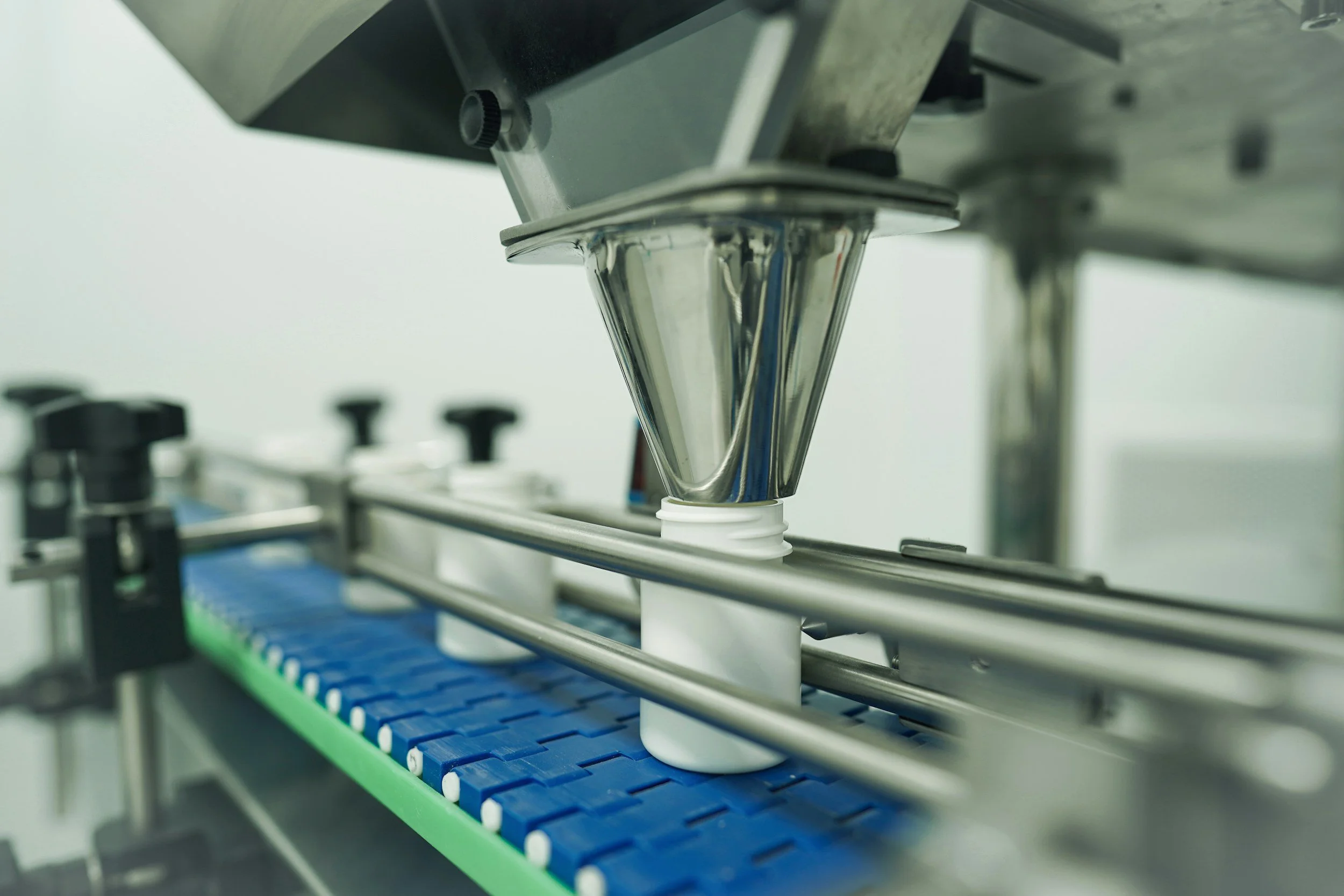
CMAC is one of very few academic facilities with operational MSMPR and Taylor-Couette continuous crystallisation platforms. We have the expertise to take you from batch to continuous with full process understanding and scale-up confidence.
Core capabilities:
-
We provide an end-to-end crystallisation development service, enabling rapid process understanding and scalable design using less than 50g of material.
-
Rapidly identify the right crystallisation conditions before committing significant material or resource.
Development begins with small-scale screening (< 10 mL) to evaluate solvent systems, supersaturation control, and key parameters influencing crystal form and morphology. Predictive modelling tools are applied to guide solvent selection and assess process feasibility, ensuring the most promising conditions are identified quickly and with minimal material consumption.
-
Build deep mechanistic understanding of your crystallisation process from the earliest stages, reducing the risk of costly surprises at scale.
Promising systems are progressed to a 20 mL reactor equipped with Process Analytical Technology (PAT) for real-time monitoring. This enables accurate estimation of nucleation and growth kinetics, supporting data-rich process development and robust understanding of the crystallisation mechanism from an early stage.
-
Translate your process with confidence, knowing performance at scale is backed by models validated at every step.
Further optimisation integrates modelling and experimental validation to refine operating windows and ensure process robustness. Scale-up is conducted across the 50–25,000 mL range to confirm reproducibility and translate process conditions at each scale, providing confidence ahead of larger-scale operations.
-
Achieve consistent product quality and manufacturing efficiency with continuous processes designed to be industry-ready from the outset.
Continuous crystallisation processes are developed and optimised using MSMPR cascades and Taylor-Couette reactor platforms, delivering scalable, efficient, and industry-ready solutions with minimal material consumption. These systems are suited for projects requiring consistent product quality and continuous manufacturing readiness.
Crystallisation Equipment
-

Batch Crystallisation Platforms
Batch crystallisation vessels, 10 mL to 25 L scale
Inline PAT tools for process monitoring and control
Advanced Process Control — PharmaMV
-

Continuous Crystallisation Platforms
Continuous crystallisation platforms, 165 mL to 20 L scale
Taylor-Couette Reactor (TCR)
Mixed-Suspension Mixed-Product Removal (MSMPR) cascade systems
-

Particle Engineering & High-Shear Processing
High-shear platforms, 1,000–30,000 s⁻¹ shear rate range
Range of pumps handling liquids and slurries (microlitres to litres capacity)
-

Filtration
Continuous filtration — Carousel Filter (AWL)
Cross-flow rigs (membrane separation technology)
-

Drying
Agitated Filter Dryer (AFD), 500 mL–10 L capacity (duty/standby configuration)
Drum dryer
Spray dryer
Vacuum oven drying
Applications and impact.
Scale-up and technology transfer support: Whether you need to transfer a process to a contract manufacturer or scale internally, our digital twin-supported scale-up methodology provides the process understanding and documented evidence needed for a smooth, low-risk transition.
Challenging and poorly crystallising materials: Some APIs resist conventional crystallisation approaches. Our combination of predictive modelling, AI-driven screening, and broad experimental capability means we are well placed to tackle difficult materials where standard methods fall short.
Polymorph and solid form control: Identifying and controlling the right crystalline form is critical to drug safety, efficacy and regulatory approval. Our screening and characterisation capabilities help you de-risk solid form selection early, avoiding late-stage surprises that can derail development programmes.
Get in touch